

Reading labels
How much protein is in flour, oats and seeds per 100 g?
Soya flour has 35.8 g of protein per 100 g, wheat flour 9.6 g and oat flakes 13.3 g. Protein and calories for 17 flours, grains and seeds.
We’re updating Bravoora, so forms and sign-in are paused for now. Nothing you saved is lost. Please try again later.
Skip to content%DV compares a serving with a US Daily Value, IU is the older unit beside mcg, and a proprietary blend gives one weight for many ingredients.
A US Supplement Facts panel gives each nutrient per serving with its %DV, the share of a Daily Value; an EU label prints %NRV against different reference values. Vitamin D is declared in mcg, with IU allowed in brackets. A proprietary blend shows one total weight, not each ingredient’s amount, and capsules and fillers sit under “Other ingredients”.
In the US, a dietary supplement carries a Supplement Facts panel[1][2]. It opens with the serving size, the amount the maker calls one serving, such as one capsule or two scoops. Each dietary ingredient follows with its amount per serving and, where a Daily Value exists, its %DV[1][3]. The amount is of the nutrient itself: in “Vitamin D (as cholecalciferol) 25 mcg”, the 25 mcg is vitamin D, and the words in brackets name the form it comes in[1].
Everything else is listed below the panel, under “Ingredients”, or under “Other ingredients” when some are already named in the panel[4]. Every number in the panel is per serving, so two capsules double every line.
%DV, the percent Daily Value, is how much of a nutrient one serving contributes to the daily amount the FDA uses as its reference[3]. For vitamin D the Daily Value is 20 mcg, so a softgel with 25 mcg reads 125%[3]. A figure over 100% is arithmetic, not advice: it compares the serving with the reference, and says nothing about how much anyone should take.
An EU food supplement states each nutrient per portion recommended for daily consumption, and gives each vitamin and mineral as a percentage of the EU reference values[5]. Those nutrient reference values are set out in Regulation (EU) No 1169/2011, and vitamin D’s is 5 µg[6]. So the same 25 µg reads 125% DV on a US label and 500% NRV on an EU one. Compare the amounts, not the percentages.
Where an ingredient has no Daily Value, the panel prints a symbol such as † or * in place of the percentage, with the footnote “Daily Value not established”[2].
IU, the international unit, is the older way of stating some vitamins. US labels now declare vitamin D in mcg and vitamin E in mg of alpha-tocopherol, and the IU figure may follow in brackets, as in “Vitamin D 25 mcg (1,000 IU)”[7]. Larger makers had to switch from 1 January 2020, smaller ones from 1 January 2021[8].
The conversions are fixed. For vitamin D, 1 mcg is 40 IU, so 1,000 IU is 25 mcg[7]. For vitamin E they depend on the form: 1 IU is 0.67 mg of natural vitamin E, printed d-alpha-tocopherol, and 0.45 mg of synthetic vitamin E, printed dl-alpha-tocopherol[8]. EU labels use µg, the same unit as mcg[6].
A proprietary blend groups dietary ingredients under one name, “Proprietary blend” or a name the maker chooses, with the total weight of the blend on the same line[1][2]. The ingredients follow in descending order of weight, heaviest first, but the amount of each is not required[2]. Vitamins and minerals that have a Daily Value cannot hide inside a blend: they are listed separately, each with its own amount[2].
So a blend tells you what is in it, which ingredient weighs most and what the whole blend weighs. It does not tell you how much of any one ingredient a serving holds. The article on caffeine shows what that gap means for a day’s total.
Ingredients that are not dietary ingredients are listed below the panel: the capsule shell, binders and fillers[4][9]. This is where gelatin appears when it makes the shell. Gelatin is made from animal collagen, usually from the skin and bones of cattle, pigs or fish; it forms many softgel capsules, and the label often does not say which animal[10].
Allergens count here too. The US allergen rules apply to dietary supplements, sesame included since 1 January 2023[11], and a fish or a tree nut must be named by its type, such as cod or almonds, not just as “fish” or “tree nuts”[12].
Guarana seed extract and green tea leaf extract carry caffeine without the word[13]. A US label names the part of the plant a botanical comes from, which is why “seed” and “leaf” appear[2]. An EU food supplement with added caffeine must say “Contains caffeine. Not recommended for children or pregnant women” and give the caffeine content per portion recommended for daily consumption[6].
Inside a proprietary blend, a caffeine source has no amount of its own. That is a gap in the label, not a zero.
Method: names from Bravoora’s ingredient guides and the public dictionary file (English edition), version 1.5.1 (built 1 October 2026), read on 13 October 2026[13][14][15]. They describe which names the guides know, not what any product contains.
Bravoora reads each amount and unit as printed, per serving, and multiplies by the servings you take. A caffeine source inside a blend is shown with the line “the tub does not say how much”, never with a guessed number. The capsule and the other ingredients are checked against your profile: for a vegetarian profile, gelatin gives “Not for you”, and an emulsifier whose source is not stated gives “Heads up”. It sets no dose and no limit: those come from your doctor or dietitian. The methodology shows how it is tested.
Let Bravoora read the label with you.
Tell it once what matters: your allergens, your diet, the ingredients you watch. Every answer then shows the words it is based on.
This guide covers the labels of dietary supplements in the US and food supplements in the EU. It does not cover medicines, which carry different labels.
Sources were checked on 13 October 2026.
This is general label information, not medical advice. It gives no dose and no limit: your doctor or dietitian sets those.
The label does not say. %DV only compares one serving with the Daily Value; whether an amount suits you is a question for your doctor or dietitian.
US labels declare vitamin D in mcg and allow the older unit in brackets. For vitamin D, 1 mcg is 40 IU, so 25 mcg and 1,000 IU are the same amount.
Not from the label. A blend lists its total weight and its ingredients in order of weight, so you know which one weighs most, but the amount of each is not required. You can ask the maker.
They use different reference values. For vitamin D the US Daily Value is 20 mcg and the EU reference value is 5 µg, so 25 µg is 125% DV and 500% NRV.
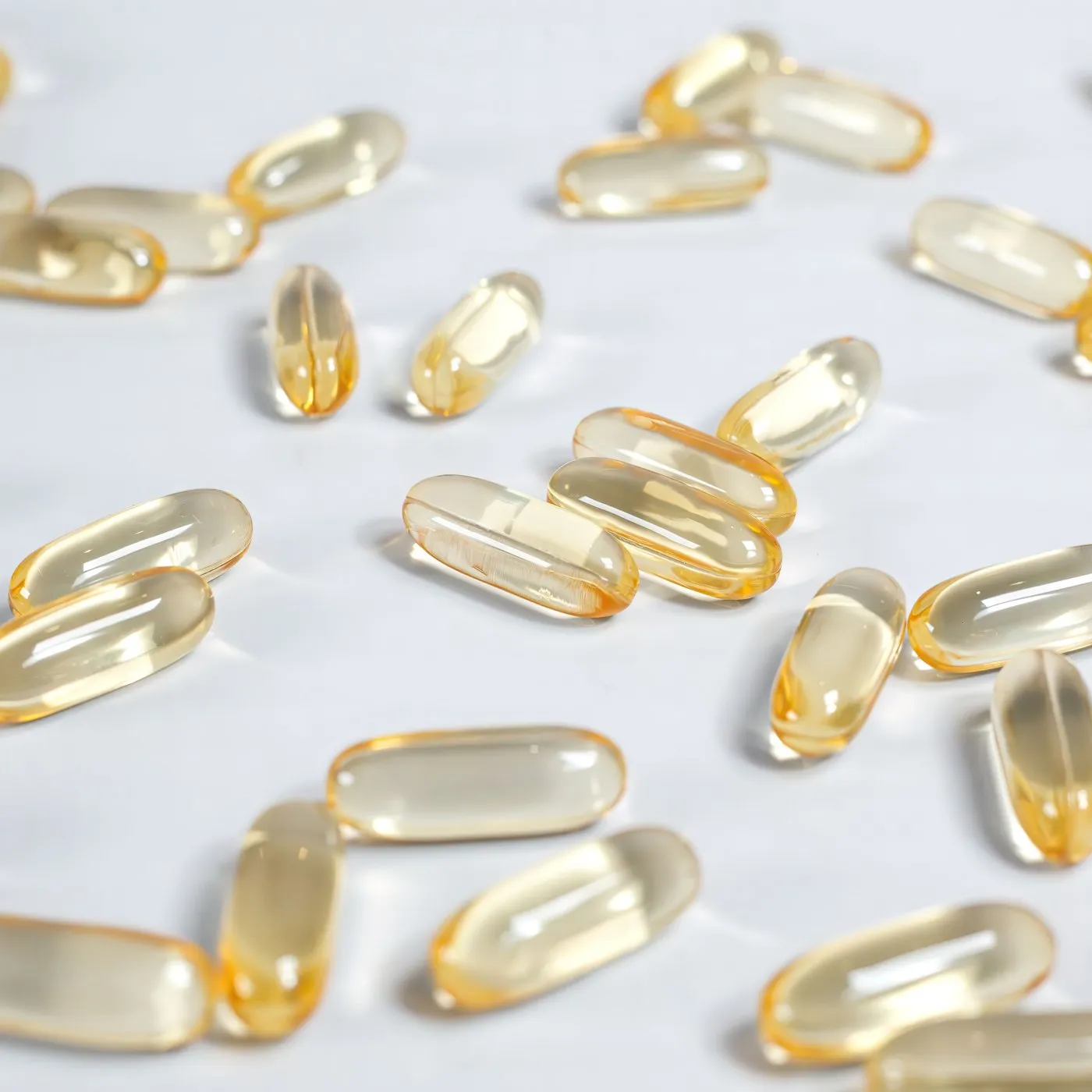 Vitamin D3The most common form of vitamin D in supplements.Read the guide
 CaffeineA natural stimulant that can also hide inside plant extracts.Read the guide
 GelatinAn animal protein that sets gummies, marshmallows and softgels.Read the guide
 Shellac (E904)The shine on sweets and coated tablets, made from an insect resin.Read the guide
Soya flour has 35.8 g of protein per 100 g, wheat flour 9.6 g and oat flakes 13.3 g. Protein and calories for 17 flours, grains and seeds.
Sugar, on 524,712 products in Open Food Facts, is vegan only for some makes; so are natural flavouring, lactic ferments and artificial flavouring.
Build your profile in about three minutes: the people you check for, what they avoid, what you track.