

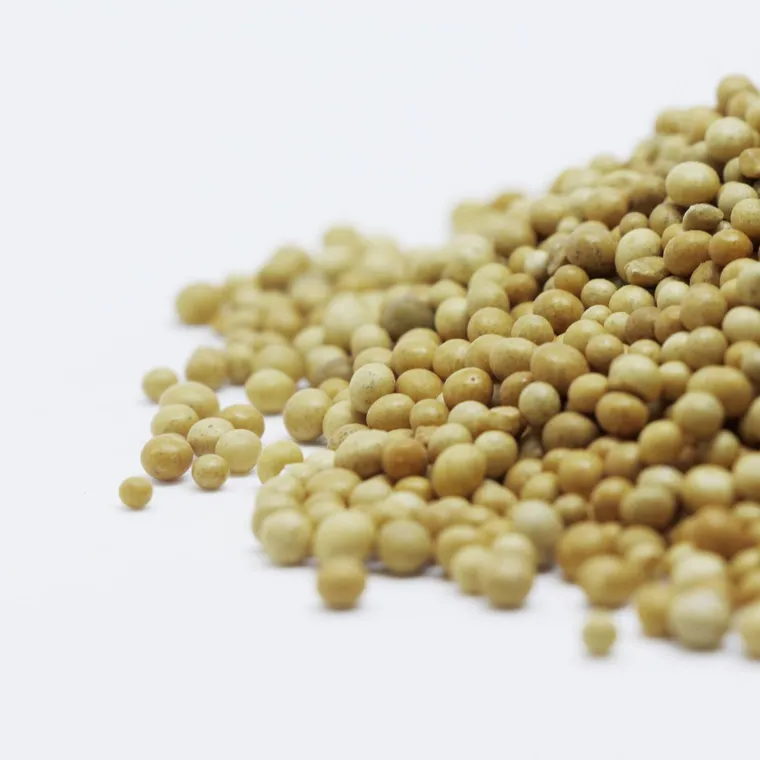
What are the other names for mustard on a label?
On a label, mustard can also appear as “Mustard seed”, “Mustard flour”, “Dijon”, “Wholegrain mustard” or “Piccalilli”.
Bravoora knows all of these, and the free label checker finds every one. Try the label checker · How Bravoora decides
Where is mustard found?
- Salad dressings and mayonnaise are often made with mustard.
- Marinades, rubs and barbecue sauces often contain it.
- Pickles and chutneys, including piccalilli, are made with mustard seed.
- Curry powders and spice blends often include ground mustard.
- Processed meats, sausages, soups and stock cubes can contain it.
Is mustard a major allergen?
Yes in the UK, Europe and the Gulf, where labels must name mustard. US labels do not have to, so check imported American packs.
| Allergen | US | UK and Europe | Gulf |
|---|---|---|---|
| Mustard | Not required | Required | Required |
Sources checked 22 September 2026. All allergen guides
Which diets and allergies does mustard fit?
For mustard: vegan, vegetarian, dairy-free, gluten-free, peanut-allergy, sesame-allergy, egg-allergy, soy-allergy and caffeine-free profiles get Fits you.
A packed product can still carry a “may contain” warning, so check the pack.
Does mustard fit you?
Pick what applies to you:
Pick at least one to see your answer.
What is mustard?
Mustard is one of the fourteen allergens that must be declared in the UK and the EU, and the Gulf standard GSO 9 lists it too. It is not on the US list, so an imported American product can contain it without naming it in the way a British one would — which matters in a Gulf supermarket where both sit on the same shelf.
How does Bravoora check for mustard?
Bravoora looks for mustard in every form, including the seed, the powder, the flour and the oil, in the language the label is printed in, and keeps “contains” and “may contain” apart.
More questions about mustard
Who looks out for mustard?
Mustard matters most to people with a mustard allergy, and anyone whose profile avoids mustard.
Is mustard vegan?
Yes. It comes from a plant.
Sources and how to cite this guide
- UK Food Standards Agency: Allergen guidance
- EU Regulation 1169/2011 (food information)
- US FDA: Questions and Answers Regarding Food Allergen Labeling, Edition 5 (January 2025)
- FARE: Update to FDA guidance for food allergen labeling (tree nuts and coconut, January 2025)
- GCC Standardization Organization: GSO 9:2022, labelling of prepackaged food (current edition)
- GCC Standardization Organization: GSO 9/2013 English text, clause 5.2.5 (the allergen list as published)
- FAO/WHO international food labelling standard (CXS 1-1985, revised 2024)
To cite this guide: Bravoora, “Mustard on food labels: other names and where it hides”, bravoora.app/ingredients/mustard/, updated 12 October 2026.
Spotted something wrong or missing? Tell us.
General information, not medical advice. Rules differ by country and products change, so always check the pack.
Related ingredient guides
 Tree nutsAlmonds, cashews, walnuts and the rest — and the sweets they hide inside.Read the guide
 FishOften where you do not expect it: dressings, sauces and stock.Read the guide
 Crustaceans and molluscsTwo separate groups on a label, and one of the most severe allergies there is.Read the guide
 CeleryThe stalk is obvious. The stock cube is not.Read the guide