

What are sulphites?
Sulphites (E220 to E228) stop food browning and stop drinks fermenting further. In the UK and the EU they must be declared when they are above 10 mg per kg or litre; US labels and the Gulf standard GSO 9 require them at 10 parts per million or more, and Canada treats them as a priority allergen at the same level. They must be declared because some people react to them.
Where are sulphites found?
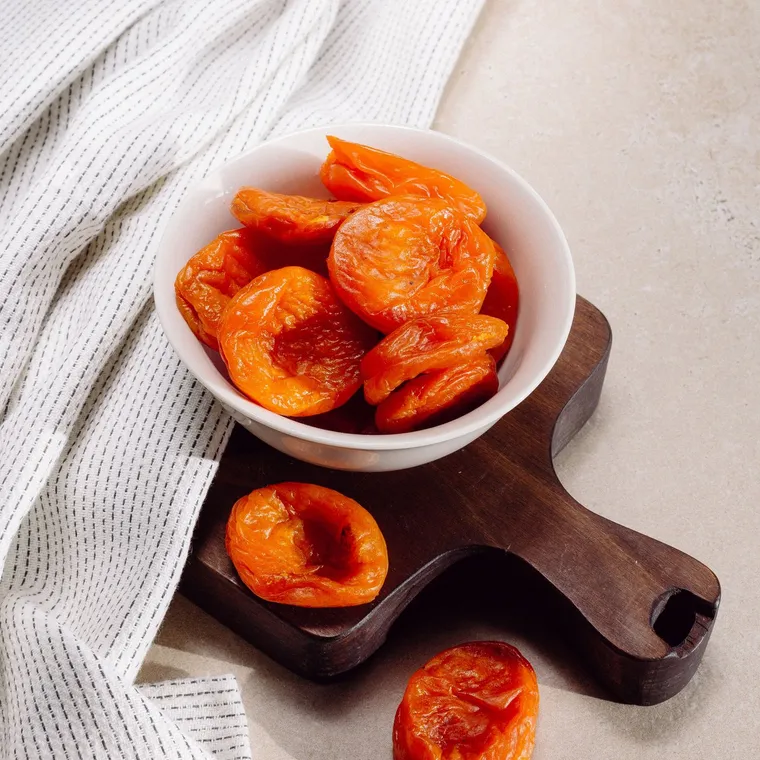
- Dried apricots, raisins and other dried fruit are often treated with sulphites.
- Vinegar, some fruit juices and cordials, and wine contain them.
- Prawns, pickles and packaged potato products can contain them.
- Sauces, condiments and some dried herbs can contain them.
Label code: E220–E228
E-number pageE220 · Sulphur dioxideE221 · Sodium sulphiteE222 · Sodium bisulphiteE223 · Sodium metabisulphiteE224 · Potassium metabisulphiteE226 · Calcium sulphiteE227 · Calcium hydrogen sulphiteE228 · Potassium hydrogen sulphite
What are the other names for sulphites on a label?
On a label, sulphites can also appear as “Sulfites”, “Sulphur dioxide”, “Sulphur dioxide (E220)”, “Sodium sulphite” or “Sodium bisulphite”.
All 48 names
Bravoora knows all of these, and the free label checker finds every one. Try the label checker · How Bravoora decides
Are sulphites a major allergen?
Sulphites must be named on labels from about 10 mg per kg or litre (10 ppm). The US does not count them as a major allergen, but its labels must still name them.
| Allergen | US | UK and Europe | Gulf |
|---|---|---|---|
| Sulphites | PartlyAt 10 ppm or more; not a major allergen | PartlyAbove 10 mg/kg or 10 mg/L | PartlyAt 10 ppm or more |
Sources checked 22 September 2026. All allergen guides
Which diets and allergies do sulphites fit?
For sulphites: vegan, vegetarian, dairy-free, gluten-free, peanut-allergy, sesame-allergy, egg-allergy, soy-allergy and caffeine-free profiles get Fits you.
A packed product can still carry a “may contain” warning, so check the pack.
Do sulphites fit you?
Pick what applies to you:
Pick at least one to see your answer.
How does Bravoora check for sulphites?
Bravoora reads every sulphite name and E-number in the group, and reports what the pack declares.
More questions about sulphites
Who looks out for sulphites?
Sulphites matter most to people who react to sulphites, and anyone whose profile avoids them.
Are sulphites vegan?
Yes. They are made in a lab or from minerals, not from animals.
Sources and how to cite this guide
- UK Food Standards Agency: Allergen guidance (sulphur dioxide and sulphites)
- US FDA: Food allergies
- Health Canada: Common food allergens
- EU Regulation 1333/2008 (food additives)
- European Union: Regulation 1169/2011 on food information to consumers, Annex II
- US FDA: Questions and Answers Regarding Food Allergen Labeling, Edition 5 (January 2025)
- FARE: Update to FDA guidance for food allergen labeling (tree nuts and coconut, January 2025)
- GCC Standardization Organization: GSO 9:2022, labelling of prepackaged food (current edition)
- GCC Standardization Organization: GSO 9/2013 English text, clause 5.2.5 (the allergen list as published)
- FAO/WHO international food labelling standard (CXS 1-1985, revised 2024)
To cite this guide: Bravoora, “Sulphites: what they are and where they’re used”, bravoora.app/ingredients/sulphites/, updated 11 October 2026.
Spotted something wrong or missing? Tell us.
General information, not medical advice. Rules differ by country and products change, so always check the pack.
Related ingredient guides
 Lecithin (E322)The emulsifier in almost every chocolate bar, from four possible sources.Read the guide
 Carmine (E120)A bright red colour made from insects.Read the guide
 CaffeineA natural stimulant that can also hide inside plant extracts.Read the guide
 GelatinAn animal protein that sets gummies, marshmallows and softgels.Read the guide